
欢乐颂
US unveils new sanction intended to strangle Iran’s economy as conflict drags on; Tehran vows tough response_我的网站

A |
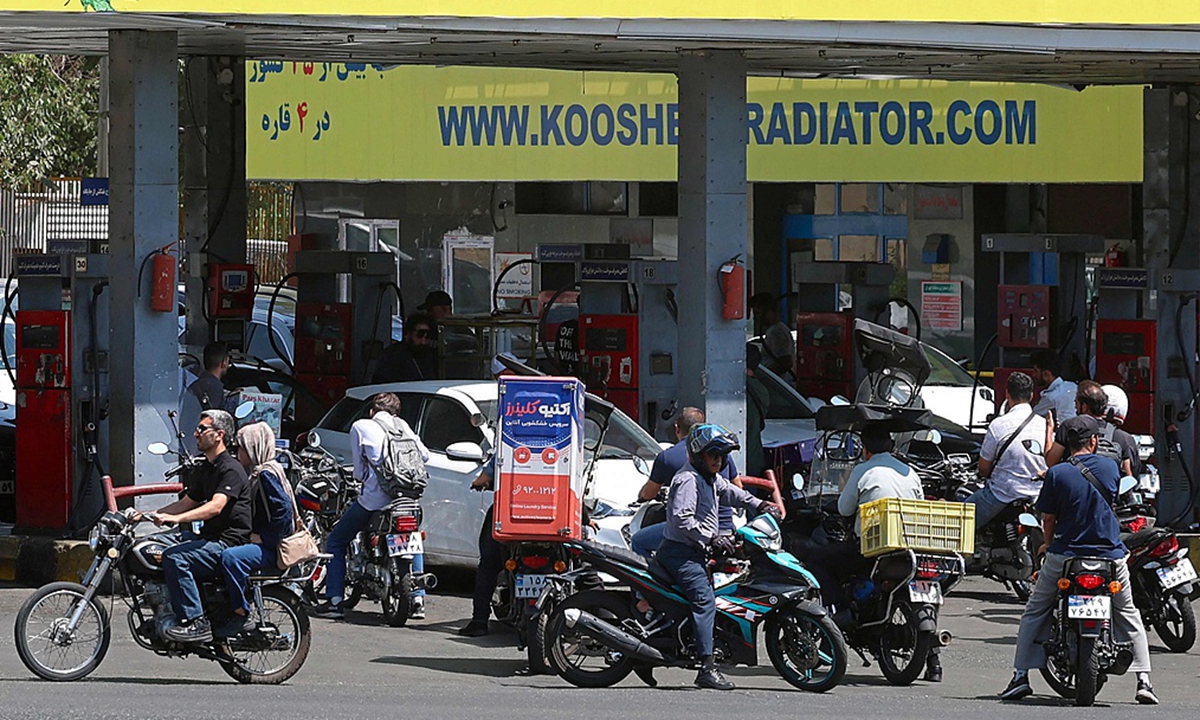
As military strikes and diplomatic negotiations have both failed to bring an early end to the roughly six‑month‑old US-Iran conflict, Washington rolled out new sanctions against Tehran on Monday local time intended to further strangle its economy. Iran, for its part, has vowed a tougher pushback.
In a news conference on Monday, Treasury Secretary Scott Bessent threatened new sanctions on countries refusing to cut economic ties with Iran, following recent rhetoric from Washington threatening an "economic D-Day" for Iran.
Meanwhile, the Office of Foreign Assets Control (OFAC) under the US Treasury announced secondary sanctions on nearly 60 entities, individuals, and vessels in multiple jurisdictions which, according to the US' claims, enable Iran's activities, including so-called nuclear and missile technology procurement, cyber operations, and oil-revenue generation networks.
According to Reuters, those sanctions targeted businesses in China, the UAE, Singapore and several other countries, including a cooking-oil refinery in France, but did not include any of the Chinese financial institutions suspected of facilitating Iran's oil trade.
In response to US Treasury Secretary Scott Bessent laying out plans for economic asphyxiation of Iran, expanding Washington's secondary sanction threats and warning of dire consequences for countries that do not join the campaign, Chinese Foreign Ministry spokesperson Lin Jian said at a press briefing on Tuesday that China has made clear on many occasions its firm opposition to illicit unilateral sanctions that have no basis in international law or the authorization of the UN Security Council.
"Economic warfare and maximum pressure provide no solution. On the contrary, they only serve to fuel tensions and lead to risk spillover, which will disrupt the global economic and financial order, and harm the legitimate rights and interests of other countries," the spokesperson said.
The pressing task is to facilitate the deescalation of the situation and return to dialogue and negotiation as soon as possible, Lin said, adding that China will do everything necessary to firmly safeguard its rights and interests, Lin added. Lin also said China's cooperation with Iran is conducted within the framework of international law, thus should not be disrupted.
When asked whether China has received any such timeline, as the US stated it would give countries a timeline on when to shut down the actions that it has identified, and how China intends to respond to the relevant announcements by the US Treasury involving China-based entities and individuals, Chinese Foreign Ministry spokesperson Lin Jian stated on Tuesday that China is closely following the developments, and will do everything necessary to firmly safeguard our rights and interests.
In May this year, China's Ministry of Commerce issued a blocking ban prohibiting any recognition, enforcement or compliance with US sanctions imposed on five Chinese companies on the grounds of their alleged involvement in Iranian petroleum transactions.
Relying on its financial hegemony and long‑arm jurisdiction, the US enforces unilateral sanctions with no basis in international law. Such measures severely undermine fundamental consensus for international trade and erode the existing international order, Zhou Mi, senior research fellow at the Chinese Academy of International Trade and Economic Cooperation, told the Global Times on Tuesday.
In essence, Washington is imposing its Iran‑focused policies to enterprises across the globe, compelling third‑party actors to fall in line with its diplomatic objectives, Zhou noted.
The latest sanctions would affect a broader range of countries, industries and firms. They will not only draw wider opposition from the international community, but also boomerang on the interests of US‑owned enterprises, he added.
Fewer levers left
"We are launching an economic onslaught against Iran's financial connections around the globe," Bessent claimed at a press conference. "Our objective is to sever every economic lifeline" that sustains the country, he said, according to a Treasury release.
The US Treasury Department said in a release that the new sectoral sanctions determinations target five critical sectors - digital assets, technology, gold, aviation and shipping - that the US claimed Iran has relied on to support its economy.
US Treasury claimed that "any entity that facilitates money laundering or sanctions evasion on behalf of Iran risks being cut off from the US financial system."
OFAC also suspended several general licenses that previously authorized certain remittance payments to Iran and Iranian access to the US cultural and academic system. The office also issued additional guidance on the so-called sanctions risks of bowing to Iranian demands related to shipping in the Strait of Hormuz.
Mohammad Mokhber, an aide to Supreme Leader Mojtaba Khamenei, said in an X post on Monday that Iran's response to US sanctions and pressure will be "more decisive than before."
Iranian Economy Minister Ali Madanizadeh said that Tehran "is and was ready," with a two-year plan to counter Washington's new sanctions. He told state television that "it seems they wished to suffer yet another defeat," per an AFP report.
Iranian Parliament Speaker Mohammad Bagher Ghalibaf responded in an X post that "the Americans know no one will believe their nonsense," noting that the US is not in a position economically to restrict its relations with other countries.
Alan Eyre, a distinguished diplomatic fellow at the Middle East Institute, told NBC News that after six months of combat, the US government "has few remaining levers it can use to convince Iran's major trading partners to materially reduce their economic ties."
While Washington's maximum‑pressure campaign may deliver short‑term shocks to Iran's economy, it can hardly "strangle" the country completely, said Liu Zhongmin, a professor at the Middle East Studies Institute of Shanghai International Studies University.
He added that Iran's economic resilience cannot be underestimated. Having borne decades of crippling sanctions from the US and Western nations, Tehran has built substantial experience in sanction‑busting and developed coping mechanisms ranging from basic‑industry self‑reliance and regional trade networks to oil‑for‑goods swaps and non‑US dollar‑denominated trade. Furthermore, the Strait of Hormuz remains a source of strategic leverage for Iran to push back against US pressure.
The expert said that Tehran and Washington are encountering "a battle of wills," and Iran believes the economic costs the US would suffer from a Hormuz blockade would outweigh the damage inflicted on Iran by sanctions.
Washington's "economic strangulation" policy risks ending in failure unless it yields short‑term outcomes, particularly securing the opening of the Strait of Hormuz, Liu added.
Self-created dilemma
As the US ramps up pressure on Iran, Americans are growing averse to a protracted war.
According to a Reuters/Ipsos poll that closed on Monday, US public approval of the war with Iran fell to its lowest level since the conflict's early days, with just 31 percent of Americans supporting US military action.
On June 18, the US and Iran signed an MoU, under which the two were scheduled to hold negotiations within a period of 60 days, which ended on August 17, to reach a final agreement. However, the talks' fate remains unclear following renewed escalation between the two countries.
Iranian political analyst Mostafa Khoshcheschm told Al Jazeera that the new US sanctions intended to create an "economic onslaught" were a "political show" of intimidation.
Liu said that by resorting to an "economic strangulation" tactic after miring itself in a fruitless military quagmire over Iran, the US has laid bare its practical predicament and strategic dilemma, and seemingly running out of cards.
Citing sources, CNN reported earlier this month that the US military has exhausted nearly 80 percent of its interceptors for a key missile defense system as senior US military commanders are warning that the Pentagon's munitions stockpile is "dangerously low."
Faced with depleted ammunition stockpiles and insufficient military‑industrial capacity, and amid growing domestic criticism of its Middle East policy, the White House has opted for tough economic measures against Iran, Liu said. "Less costly than military coercion, such moves help Washington strike a tough posture before voters and shun political risks from further military escalation," said the expert.
There is, however, an increasingly obvious paradox in Washington's economic warfare against Iran: the tighter the sanctions, the tighter global energy supplies become, and the higher costs borne by American consumers and businesses, the expert added.
。 2016年,杭州被赋予“生态文明之都”的城市定位。如今回首这十年,杭州生态文明建设成果如何?或许可以从昨天的2026年全国生态日杭州主场活动上找到答案。有趣的是,活动实现“零碳”办会,会上产生的碳排放由国网杭州供电公司通过捐赠绿证等方式实现碳中和。

B | 无人区变网红徒步路线杭州用法治护航绿水青山在8月15日“全国生态日”这一天,《中华人民共和国生态环境法典》将正式施行,为美丽中国建设筑牢法治基石。活动现场,《杭州法院生态环境和资源保护审判白皮书》《杭州生态环境和资源保护检察公益诉讼白皮书》及生态环境损害赔偿典型案例发布,覆盖水污染治理、土壤污染防治、林业资源管护、古树名木保护、外来物种入侵治理等多个领域。临安区人民检察院第五检察部副主任黄圣媛分享了一个关于“守护浙西之巅”的故事。有人说,看一条徒步线路火不火,就看引导飘带多不多。可这些五颜六色的飘带却出现在了浙江清凉峰国家级自然保护区的核心区里,仅三段线路就发现70多家省内外户外徒步团队留下的300多条飘带。“我国法律明确规定,除法定情形,核心区禁止人为活动。非法穿越不仅会遗留大量的垃圾,还会踩踏植被、惊扰动物,埋下火灾隐患,造成水土流失。”黄圣媛说。整治非法穿越刻不容缓。

C | 杭州两级检察机关迅速推进公益诉讼案件办理,临安区检察院通过行政公益诉讼推动线上线下同步监管,开展专项巡查,督促下架删除违规推文145篇。杭州市检察院以民事公益诉讼立案调查,查实10家旅行社3年内组织非法穿越1.3万余人次。今年6月5日,浙江首例非法穿越公益诉讼案在杭州中院开庭。涉事企业认可全部诉讼请求,并主动提出设立专项公益基金,完善内部管理制度。现已到位的18万元生态损害赔偿金,将全部用于保护区生态修复。除此以外,检察机关还推动户外平台发起自然保护计划,将保护区相关搜索词弹窗替换为普法提示;推动导航平台加装电子围栏,清晰标注生态红线范围,引导户外组织与普通市民守住行为边界。坐公交地铁能攒积分换福利“绿行杭州”碳普惠平台正式上线低碳不只是一句口号,一批批低碳转型的先行者用实践探索着“绿水青山就是金山银山”的杭州路径,集中展示了杭州在能源管理、循环经济、建筑改造等领域的低碳转型典型实践。拱墅区石德立交光伏声屏障示范场景便是2026年度“杭州市十大低碳应用场景”之一。该场景对一段150米长的老旧高架声屏障进行绿色化、智能化改造,在保留原声屏障主体结构的基础上,将透光玻璃隔音板换成定制化碲化镉双面发电玻璃,兼具发电与降噪功能,所发电力直接供给桥下的篮球公园停车场充电桩。建成后年发电量约7300度,全生命周期(25年)内可累计减排二氧化碳163吨,为老旧高架设施赋予全新的绿色生命力。

D | 值得一提的是,活动当天,“绿行杭州”碳普惠平台正式上线。这是一个全公益、零门槛的绿色出行激励平台,市民只需杭州公共交通“一码通”刷码乘坐公交、地铁、水上巴士,系统自动核算碳减排量并发放碳积分。

E | 碳积分可兑换四大权益,包括绿色出行类(交通直充金、骑行卡、机场贵宾室等)、赛事展会类(漫展、花展、脱口秀门票等)、医疗健康类(三甲医院专家号源)、文创好物类(市民码皮肤、数币硬钱包)等。今年4月28日,碳普惠平台试运行,三个多月以来,已累计访问量65万人次,累计权益兑换2.8万笔。“‘绿行杭州’平台把每一次乘车记录转化为碳积分,提升了市民参与低碳社会建设的积极性。”杭州市民卡管理有限公司董事长、总经理周鸣告诉记者,平台后续计划接入实体公交卡和小红车的骑行乘车数据,同时对接更多企业单位,把权益体系打造完整。

F |
Current article:http://7ypdug9.dingruorenhongqiaminmeipeiliu.cyou/news/20260826_508.html
Published on:03:52:31